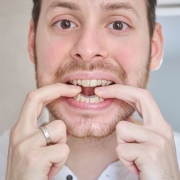
Man pulling down his lower lip to examine his teeth and gums for dental issues.

Can You Wear Invisalign If You Have Dental Crowns or Missing Teeth?

Dental crowns or missing teeth don’t automatically mean you cannot straighten your smile. Many adults have previous restorative work and still qualify for orthodontic treatment. However, the condition of your remaining teeth, the location of missing teeth, and your bite alignment all influence the treatment approach.

At A Beautiful Smile, The Office of Dr. Gina Mancini, Dr. Gina Mancini understands that every smile has different restorative and alignment needs. 

Patients considering invisalign in Jacksonville often wonder whether previous dental procedures will affect their eligibility. The reassuring answer is that clear aligners can work with many existing dental restorations, as long as the treatment plan accounts for their condition and limitations.

The American Association of Orthodontists confirms that crowned teeth can move during orthodontic treatment. However, you need a careful evaluation before starting.

Can You Wear Clear Aligners With Dental Crowns?

Yes, having one or more dental crowns does not automatically disqualify you from clear aligner treatment. A crown covers a damaged or weakened natural tooth, but the tooth’s root and supporting structures remain in place.

Orthodontic movement occurs through the supporting bone and periodontal ligament. As a result, a crowned tooth can respond to carefully planned pressure.

However, several factors require consideration-

1. Crown Condition and Stability

Your existing crowns must be stable and free from significant damage. Loose crowns, untreated decay beneath restorations, or damaged supporting teeth may require attention before orthodontic treatment begins.

2. Attachment Placement on Crowns

Some treatment plans use small, tooth-colored attachments to help control tooth movement. These attachments usually bond to natural enamel. Porcelain and ceramic surfaces may require different bonding considerations.

Your dentist must determine whether attachments can be placed safely without compromising the restoration.

3. Crown Material and Fit

Crowns may consist of porcelain, ceramic, zirconia, or metal-based materials. Each material has different bonding properties.

The restoration’s shape and position can also affect how an aligner fits around the tooth. A properly fitting tray is essential for predictable tooth movement.

4. Existing Bite Alignment

Crowns affect the shape and contact points of your teeth. If your bite is uneven, the treatment plan must account for how the upper and lower teeth meet.

The goal is to improve alignment without placing unnecessary pressure on existing restorations.

The FDA also notes that existing crowns and other dental restorations may loosen or become dislodged during clear aligner treatment. Regular monitoring helps identify potential complications.

What If You Have Missing Teeth?

Missing teeth do not automatically prevent you from receiving orthodontic care. In fact, correcting tooth alignment can sometimes be part of a larger plan to restore spaces left by tooth loss.

Your treatment depends on how many teeth are missing, where they are, and the condition of the surrounding teeth.

Closing the Space Left by a Missing Tooth

In some cases, neighboring teeth can move into an existing gap. This may reduce spacing and improve your smile’s overall alignment.

However, closing a gap is not always the right approach. Your bite, jaw structure, and available space must be evaluated first.

Maintaining Space for Dental Implants

Sometimes, keeping the gap open is more appropriate. If you plan to replace a missing tooth with a dental implant, orthodontic treatment may help position neighboring teeth and create enough room for restoration.

Dental implants are anchored into the jawbone. Unlike natural teeth, they cannot move during orthodontic treatment. Therefore, their position must be considered when planning tooth movement.

Planning Around Existing Dental Bridges

A dental bridge connects multiple teeth through a single restoration. Since connected teeth cannot move independently, bridges may limit certain orthodontic movements.

Your treatment provider may need to consider alternative approaches based on the bridge’s location and design.

Who Is a Suitable Candidate?

The right treatment depends on more than whether you have crowns or gaps. Your overall oral health and the type of tooth movement required also matter.

You may be a suitable candidate if you:

  • Have stable dental crowns without active decay or infection.
  • Have healthy gums and sufficient supporting bone.
  • Have minor to moderate crowding or spacing concerns.
  • Have missing teeth with a clear restorative treatment plan.
  • Can commit to wearing removable aligners as instructed.
  • Have a bite that can be corrected with clear aligner therapy.

Before treatment, your dentist will examine your teeth, gums, existing restorations, and bite. Digital scans and dental X-rays may help assess tooth positions and supporting structures.

Some patients may need fillings, gum treatment, crown repairs, or other restorative procedures before starting. Complex alignment problems may also require traditional braces or a combination of treatments.

How Does Treatment Work With Existing Restorations?

A treatment plan involving crowns or missing teeth requires careful coordination between orthodontic and restorative care.

At each stage, the provider must consider which teeth need to move, which spaces need to remain, and how existing restorations will respond.

The process generally includes:

  1. Initial consultation: Discuss your smile concerns, previous dental procedures, and expectations.
  2. Comprehensive examination: Evaluate your teeth, gums, crowns, missing spaces, and bite alignment.
  3. Digital treatment planning: Use appropriate scans and imaging to assess tooth positions and plan movements.
  4. Custom aligner fabrication: Create a series of clear trays based on the approved treatment plan.
  5. Progress monitoring: Attend follow-up visits to check tooth movement, restoration stability, and overall oral health.
  6. Retention planning: Wear retainers as recommended to maintain your new tooth positions.

If you have an implant or bridge, its position must remain part of the treatment plan. The timing of replacement restorations may also need to be coordinated with orthodontic care.

The FDA recommends professional supervision throughout treatment because improper tooth movement can affect your bite and oral health.

Start Your Smile Journey in Jacksonville

Dental crowns or missing teeth shouldn’t stop you from exploring ways to improve your smile. With proper evaluation, many patients can pursue orthodontic treatment while protecting their existing dental work.

At A Beautiful Smile, The Office of Dr. Gina Mancini, patients can explore clear aligner options alongside restorative services, including same-day CEREC crowns and dental implant restorations.

If you are considering Invisalign and want to understand how your existing dental work may affect treatment, a consultation can help clarify your options.

Our Jacksonville dentist can help you understand your alignment concerns and determine whether clear aligner treatment fits your oral health needs.

Book an appointment at 3685 Henderson Drive, Jacksonville, NC 28546. Call 910-347-9100 to discuss your smile goals and take the next step toward a healthier, straighter smile. Patients from Jacksonville, Richlands, Hubert, and nearby communities are welcome.

Frequently Asked Questions

  1. Can clear aligners move teeth that have crowns?

Yes. Teeth with crowns can move because their natural roots and supporting structures remain in place. However, crown stability, material, and attachment placement must be considered before treatment begins.

  1. Can I straighten my teeth if I have missing molars?

Yes, depending on the location of the missing molars and your bite. Treatment may close the gaps or maintain space for future replacement. A clinical evaluation helps determine the appropriate approach.

  1. Will orthodontic treatment damage my existing crowns?

Not necessarily. However, restorations may loosen or become dislodged during tooth movement. Regular monitoring and careful treatment planning help reduce potential complications.

  1. Should I get dental implants before or after clear aligner treatment?

The timing depends on your alignment goals and restorative needs. In many cases, orthodontic treatment comes first because implants cannot move once placed in the jawbone.

  1. Can I wear clear aligners if I have dental bridges?

Possibly, but bridges connect multiple teeth and can restrict independent tooth movement. Your provider must assess the bridge’s position and determine whether an alternative treatment approach is necessary.

  1. Do I need to replace my crowns before starting orthodontic treatment?

Not always. Stable crowns may remain in place throughout treatment. However, damaged, loose, or poorly fitting restorations may need attention before tooth movement begins.


Woman examining her tongue in a bathroom mirror, checking for signs of oral dryness.

How Does Dry Mouth Affect Your Teeth and When Should You See a Dentist?

Your saliva does much more than keep your mouth moist. It protects your teeth, controls harmful bacteria, and helps maintain a healthy balance inside your mouth. When saliva production decreases, your teeth lose an important layer of natural protection. This condition, medically known as xerostomia, can affect your oral health even when you follow a regular brushing routine.

At A Beautiful Smile, The Office of Dr. Gina Mancini, Dr. Gina Mancini helps patients understand the connection between oral health and everyday symptoms. If you are looking for a dentist in Jacksonville, understanding the warning signs of reduced saliva production can help you seek care before minor concerns develop into more serious dental problems.

According to the National Institute of Dental and Craniofacial Research (NIDCR), saliva washes away food particles, contains minerals that support tooth strength, and helps control harmful microorganisms. Less saliva can therefore increase the risk of cavities and oral infections.

How Reduced Saliva Affects Your Teeth

Saliva continuously protects your teeth throughout the day. When your salivary glands produce less fluid, several changes can affect your enamel, gums, and overall oral health.

Here are five ways insufficient saliva can affect your smile.

1. Increases the Risk of Tooth Decay

Saliva helps remove leftover food particles and neutralize acids produced by oral bacteria. When saliva levels decrease, these acids can stay on tooth surfaces longer.

This creates an environment where harmful bacteria can contribute to cavity formation. Decay may develop around the gumline, between teeth, and on exposed root surfaces.

2. Weakens Natural Enamel Protection

Your enamel is constantly exposed to acids from foods, beverages, and bacterial activity. Saliva contains calcium and phosphate, which help repair early mineral loss through a process called remineralization.

With reduced saliva flow, this natural repair process becomes less effective. Teeth may become more vulnerable to sensitivity and decay.

3. Contributes to Persistent Bad Breath

Saliva helps clear bacteria and food debris from the mouth. Without enough saliva, these materials can accumulate and contribute to bad breath.

Brushing and using mouthwash may provide temporary relief, but the underlying cause can remain untreated.

4. Increases Gum Irritation and Infection

Reduced moisture can make oral tissues more vulnerable to irritation. Bacteria may also accumulate more easily, contributing to plaque buildup and gum inflammation.

Some people may develop oral fungal infections, including candidiasis, which can cause redness, soreness, and white patches.

5. Makes Eating and Speaking Difficult

Insufficient saliva can make chewing, swallowing, and speaking uncomfortable. Food may feel difficult to move around the mouth, while the tongue and cheeks may feel sticky or irritated.

These problems can also affect your food choices and make everyday activities less enjoyable.

What Causes Reduced Saliva Production?

Several factors can affect how much saliva your salivary glands produce. Identifying the underlying cause matters because treatment depends on what is causing the problem.

Common causes include:

  • Medication side effects: Antihistamines, antidepressants, blood pressure medications, and certain pain relievers can reduce saliva production.
  • Dehydration: Not drinking enough water, excessive sweating, or illness can reduce moisture levels throughout your body.
  • Medical conditions: Diabetes and autoimmune conditions such as Sjögren’s disease can affect salivary gland function.
  • Cancer treatments: Radiation therapy involving the head and neck can damage salivary glands. Certain chemotherapy treatments can also affect saliva.
  • Mouth breathing: Breathing through your mouth, particularly while sleeping, can contribute to oral dryness.
  • Lifestyle habits: Tobacco use, alcohol consumption, and excessive caffeine intake may worsen existing symptoms.

This condition is not an inevitable part of aging. Older adults may experience it more frequently because of medication use and certain health conditions.

When Should You See a Dentist?

Occasional oral dryness after exercise, stress, or inadequate fluid intake may improve once you address the cause. However, persistent symptoms deserve attention.

Schedule a dental evaluation if you experience:

  • A consistently sticky or dry feeling inside your mouth.
  • Frequent thirst, especially during the night.
  • Difficulty chewing, swallowing, or speaking.
  • Cracked lips, a rough tongue, or a burning sensation.
  • Recurring cavities or increased tooth sensitivity.
  • Persistent bad breath despite regular oral hygiene.
  • Mouth sores, redness, or recurring oral infections.

Don’t wait for tooth pain to seek help. Early evaluation can identify changes in your teeth and gums before they require more extensive treatment.

A dentist can examine your teeth, assess your oral tissues, review your symptoms, and identify signs of reduced saliva flow.

If you live in Jacksonville or surrounding communities, our trusted Jacksonville dentist can also help you understand whether your symptoms require dental attention or further medical evaluation.

Woman sitting at a dining table looking uncomfortable while holding her jaw, illustrating difficulty eating.

How Can You Protect Your Teeth?

Although professional care is important, everyday habits can help reduce the effects of reduced saliva production. Small changes can support your oral health and lower your risk of tooth decay.

Consider these preventive steps:

  • Drink water regularly: Take frequent sips throughout the day, especially after meals. Keep water nearby if you spend long hours outdoors in Jacksonville’s warm, humid climate.
  • Choose sugar-free gum: Chewing sugar-free gum containing xylitol may stimulate saliva production and help keep your mouth moist.
  • Use fluoride toothpaste: Brush twice daily with fluoride toothpaste to strengthen enamel and protect against cavities.
  • Clean between your teeth: Floss daily to remove food particles and plaque from areas your toothbrush cannot reach.
  • Limit sugary and acidic drinks: Reduce soda, sweetened coffee, energy drinks, and citrus beverages that can contribute to enamel damage.
  • Avoid alcohol-based mouthwash: Alcohol-containing rinses may worsen oral dryness. Ask about alcohol-free alternatives.
  • Consider a humidifier: Using a humidifier while sleeping may help reduce nighttime discomfort, particularly if you breathe through your mouth.

You can also ask about saliva substitutes, moisturizing gels, and prescription fluoride products. These options may provide additional protection when lifestyle changes alone are not enough.

What Happens During a Dental Evaluation?

A dental evaluation helps identify how reduced saliva production affects your teeth and soft tissues. It also helps determine whether you need preventive care or additional testing.

During your visit, the dental team may:

  1. Review your symptoms: You may be asked when the problem started, how frequently it occurs, and whether it affects eating or sleeping.
  2. Discuss your medications: Sharing your prescription and over-the-counter medication list can help identify possible side effects.
  3. Examine your teeth and gums: The evaluation may reveal early cavities, enamel changes, gum inflammation, or signs of oral infection.
  4. Assess saliva production: The team may look for signs of reduced saliva flow and recommend further testing when necessary.
  5. Discuss preventive options: Recommendations may include fluoride applications, additional cavity protection, and products that help maintain oral moisture.

If a medication or underlying health condition appears to be responsible, your dental provider may recommend discussing it with your physician. Never stop taking prescribed medication without medical guidance.

Get Help Before Dental Problems Develop

Persistent xerostomia can gradually affect your teeth, gums, and daily comfort. Recognizing the symptoms early allows you to protect your enamel and prevent avoidable dental complications.

If you notice ongoing dry mouth, increased sensitivity, or recurring cavities, consider scheduling an evaluation rather than waiting for discomfort to become severe.

At A Beautiful Smile, The Office of Dr. Gina Mancini, patients receive family-focused dental care in a welcoming environment. The practice offers comprehensive family dentistry, oral cancer screenings, and emergency dental care.

If you are looking for a trustworthy Jacksonville dentist serving Jacksonville, Richlands, Hubert, and nearby communities, our practice welcomes you to discuss your oral health concerns.

Book an appointment with Dr. Gina Mancini at 3685 Henderson Drive, Jacksonville, NC 28546. Call 910-347-9100 to arrange your visit and take an important step toward protecting your smile.

Frequently Asked Questions

  1. Can insufficient saliva cause cavities?

Yes. Saliva helps wash away food debris, neutralize acids, and protect enamel. When saliva production decreases, cavity-causing bacteria can become more active. Regular dental examinations and fluoride protection can help reduce this risk.

  1. Is nighttime oral dryness a warning sign?

Yes. Waking up with a sticky mouth or a dry tongue may indicate reduced saliva production or mouth breathing. Persistent symptoms deserve attention because they can increase your risk of cavities and oral infections.

  1. Can medications cause reduced saliva production?

Yes. Certain medications for allergies, depression, high blood pressure, and other conditions can affect salivary gland activity. Review your medication list with the healthcare provider to discuss possible alternatives or symptom management.

  1. How can I increase saliva production naturally?

Drinking water regularly, chewing sugar-free gum, and limiting caffeine may help stimulate saliva flow. Avoid tobacco and alcohol-based mouth rinses. Persistent symptoms may require additional preventive care and saliva substitutes.

  1. Can reduced saliva production lead to tooth loss?

It can increase the risk of extensive tooth decay and other oral complications. If cavities remain untreated, they may eventually damage the tooth beyond repair. Early evaluation and preventive treatment can help protect your natural teeth.

  1. Does oral dryness require professional treatment?

Don’t ignore persistent oral dryness, especially if it’s accompanied by sensitivity, recurring cavities, or difficulty swallowing. A dental evaluation can identify oral complications and help determine appropriate preventive measures.


Dentist in Jacksonville placing a finished same-day crown

How Does a Same-Day Crown Work? What Happens During Your Visit

Anyone who has taken time off work in Jacksonville for a dental appointment knows the frustration of a second trip. First visit to prepare the tooth, a temporary that never quite feels right, then back again two or three weeks later for the real thing. For families coming in from Richlands or Swansboro, or anyone working around base schedules, that extra visit can be the reason a cracked tooth stays unrepaired.

That’s the problem same day crowns Jacksonville patients ask about are designed to solve. Instead of waiting weeks, the entire process happens in one appointment. If you’ve never had one done, though, it helps to know exactly what the visit looks like before you sit in the chair.

What Is a Same-Day Crown?

A same-day crown is a tooth-shaped cap made in the dental office while you wait, using digital scanning and in-office milling technology. It covers and protects a damaged tooth, restoring its shape, strength, and appearance. Unlike traditional crowns, which are made in an outside lab, a same-day crown is designed, made, and placed during a single visit.

How Same Day Crowns in Jacksonville Work, Step by Step

Knowing what’s coming makes the appointment far less stressful. Here’s how a typical visit unfolds.

Step 1: Exam and Treatment Planning

Your dentist first checks the tooth, usually with an X-ray, to confirm a crown is the right solution. Cracks, large fillings that are wearing out, and teeth weakened by decay are common reasons.

Step 2: Numbing and Preparing the Tooth

The area is numbed so you stay comfortable. Your dentist then removes any decay and gently reshapes the tooth so the crown can fit snugly over it.

Step 3: Digital Scan Instead of Messy Impressions

Rather than biting into a tray of impression material, a small camera captures a 3D image of your tooth. Many patients say this is the biggest relief of the whole process, especially if they have a strong gag reflex.

Step 4: Designing the Crown

Software uses the scan to build a custom crown that matches the size and shape of your tooth and fits with your bite. Your dentist reviews and adjusts the design on screen.

Step 5: Milling the Crown

The finished design is sent to an in-office milling unit that shapes the crown from a solid block of ceramic. This typically takes a short while, so many patients relax in the chair or in the waiting area.

Step 6: Final Fit and Placement

Once the crown is ready, your dentist checks the fit, color, and bite, makes any small adjustments, and bonds it securely in place. You leave with a finished tooth.

How Long Does a Same-Day Crown Take?

Most same-day crown appointments take a couple of hours from start to finish, though the exact time depends on the tooth and how much preparation it needs. That’s longer than a standard filling, but far shorter than two separate visits spread across several weeks.

Is Getting a Same-Day Crown Painful?

The procedure itself shouldn’t be painful, since the tooth is numbed before any work begins. Some patients notice mild tenderness or sensitivity to temperature for a few days afterward, which usually settles quickly. If discomfort lingers or your bite feels off, your dentist can make a quick adjustment.

Who Is a Good Candidate?

Many patients with a damaged tooth are candidates, but a short exam is the only way to be sure.

Who Is a Good Candidate for Same Day Crowns in Jacksonville?

Common reasons people choose a crown include:

  • A cracked or fractured tooth
  • A large old filling that is breaking down
  • A tooth weakened by decay
  • A tooth treated with a root canal
  • A worn or chipped tooth that needs protection

Some situations, such as very complex bite problems or extensive damage, may call for a different approach. A good dentist in Jacksonville will tell you plainly whether a same-day crown fits your case or whether another option makes more sense.

How Long Do Same-Day Crowns Last?

With good brushing, flossing, and regular checkups, a ceramic crown can last many years, often a decade or longer. Habits like chewing ice, grinding your teeth, or using your teeth to open packages can shorten that lifespan, so protecting your crown is worth the effort.

Can I Wait to Fix a Cracked Tooth?

It’s tempting to wait when a tooth doesn’t hurt, but cracks tend to grow over time. Waiting can turn a straightforward crown into a root canal or an extraction. If you’ve noticed a crack, a chip, or a filling that feels loose, it’s better to have it looked at sooner than later.

Local Care Without the Extra Trips

Patients from Jacksonville, Richlands, Hubert, and Piney Green often tell us the single-visit format is what finally got them to schedule treatment they’d been putting off. One appointment means one drive, one block of time off, and one numbing session instead of two.

The American Dental Association notes that crowns are a common and effective way to restore teeth that are cracked, heavily filled, or weakened, helping protect them from further damage.

Protect the Tooth Before It Gets Worse

A damaged tooth rarely fixes itself, and the earlier it’s treated, the simpler the repair usually is. If you’ve been wondering whether same day crowns Jacksonville patients rely on could work for you, a quick evaluation will give you a clear answer.

A Beautiful Smile, The Office of Dr. Gina Mancini offers same-day crowns for patients throughout the Jacksonville, NC area. Call (910) 347-9100 to schedule your visit.

Frequently Asked Questions

1. Can I really get a crown in one visit?

Yes. With digital scanning and in-office milling, the crown is designed, made, and placed during a single appointment, so no temporary crown is needed.

2. Will a same-day crown look natural?

Ceramic crowns can be matched closely to the color and shape of your surrounding teeth, so they blend in well.

3. Do I need to avoid certain foods afterward?

Your dentist will give specific instructions, but most patients are advised to be gentle with very hard or sticky foods in the first day or so.

4. Is a same-day crown as strong as a traditional crown?

Modern ceramic materials are durable, and many patients do well with them. Your dentist can explain whether they suit the tooth being treated.

5. What if my tooth needs more than a crown?

If the tooth has deeper damage, your dentist may recommend additional treatment first, such as a root canal, before placing the crown.

Dentist examining a dental implant restoration model

Three Reasons to Talk with Your Dentist about Implant Restoration

Dental implants can last for many years with proper care, but the crown, bridge, or other restoration attached to an implant may eventually need repair or replacement. Changes in how your implant feels or looks can also indicate a problem that needs professional attention.

If you notice any of the following signs, contact A Beautiful Smile, The Office of Dr. Gina Mancini, in Jacksonville, NC, to have your implant evaluated.

1. The Implant Restoration Feels Loose

Dental implants and their restorations should feel stable during everyday activities such as eating and speaking. If your implant-supported crown, bridge, or denture feels loose, or your bite suddenly seems uneven, schedule a dental appointment.

Sometimes, the issue involves a loose screw or the restoration itself and may be corrected with an adjustment or repair. However, movement can also indicate a problem with the implant or surrounding bone. Avoid trying to tighten or repair anything yourself, and have your dentist determine the cause.

2. The Implant Restoration Is Damaged

Dental implant restorations can experience wear over time. An accident, biting down on something hard, or everyday use may cause a crown or other component to chip, crack, or fracture. Changes in appearance may also indicate that the restoration needs attention.

Even minor damage should be checked before it worsens. Your dentist can examine the restoration and determine whether it needs repair, replacement, or another form of treatment. Prompt evaluation can also help prevent further damage to the surrounding teeth and tissues.

3. Your Gums Are Receding Around the Implant

If your gums begin pulling away from an implant, you may notice more of the restoration or implant components becoming visible. Redness, swelling, tenderness, or bleeding around the implant can also signal a problem.

Gum recession and bone loss around an implant may be associated with inflammation or other oral health concerns. These changes do not always mean the implant must be replaced, but they should be evaluated promptly. Regular dental checkups help your dentist monitor the gums, surrounding bone, and stability of your restoration.

Jacksonville, NC Dental Implant Restoration

Dental implants can help restore chewing function and replace missing teeth, but the restoration and surrounding tissues need ongoing care. If you notice looseness, damage, gum changes, or discomfort around an implant, do not wait for the problem to worsen.

At A Beautiful Smile, The Office of Dr. Gina Mancini, patients in Jacksonville, NC, can schedule an evaluation to determine whether their implant restoration needs adjustment, repair, or replacement.

Contact the office at (910) 347-9100 to schedule an appointment.

Man Address Tooth Infections Before They Threaten Your Oral Health

Dental Abscess Symptoms: When Should You See an Emergency Dentist?

A persistent toothache, swollen gums, or an unusual taste in your mouth may indicate more than a minor dental problem. These symptoms can signal a dental abscess, a bacterial infection that causes pus to build up around a tooth or in the surrounding gum tissue. Without treatment, the infection may spread and lead to serious complications.

Recognizing the warning signs can help patients in Jacksonville, NC, seek care before their condition worsens. At A Beautiful Smile, Dr. Gina Mancini helps patients address urgent oral health concerns through dental examinations and appropriate treatment recommendations.

What Is a Dental Abscess, and How Does It Develop?

A dental abscess is a localized collection of pus caused by a bacterial infection. It commonly develops when bacteria enter the tooth through untreated decay, cracks, or damaged restorations.

There are three primary types:

  • Periapical abscess: Develops near the root tip, usually due to an infection inside the tooth.
  • Periodontal abscess: Forms in the gum tissue alongside a tooth, often associated with periodontal disease.
  • Gingival abscess: Develops within the gum tissue, sometimes following irritation from trapped debris.

Although these infections originate in different areas, each requires professional evaluation and treatment.

What Are the Early Warning Signs of a Dental Abscess?

Symptoms vary depending on the infection’s location and severity. Some patients experience intense pain, while others notice swelling or changes in their gums.

1. Persistent or Throbbing Tooth Pain

A continuous, throbbing toothache is a common warning sign. Pain may radiate to the jaw, ear, or neck and worsen when lying down.

2. Swollen, Red, or Tender Gums

Inflamed gum tissue around the affected tooth may look red and swollen and hurt when touched. A small, pimple-like bump may also develop on the gum.

3. Sensitivity to Hot and Cold Foods

An infected tooth may react strongly to temperature changes. Discomfort can continue after the hot or cold stimulus has been removed.

4. Unpleasant Taste or Persistent Bad Breath

An abscess may release pus into the mouth, producing a bitter or unpleasant taste. The infection may also cause persistent bad breath.

5. Facial Swelling and Difficulty Chewing

As inflammation progresses, swelling may affect the cheek or jaw. Patients may have discomfort when chewing or when pressure is applied to the affected tooth.

These dental abscess symptoms should never be ignored, even when discomfort temporarily improves.

When Does a Dental Abscess Become a Dental Emergency?

A dental abscess requires prompt professional attention because the underlying infection will not reliably resolve without treatment.

Certain symptoms indicate that the infection may be spreading.

Contact an emergency dentist promptly if you experience:

  • Severe tooth pain that interferes with eating or sleeping.
  • Increasing gum or facial swelling.
  • Pus draining from the affected area.
  • Pain accompanied by fever or general illness.
  • Difficulty opening your mouth normally.

Seek immediate hospital emergency care if you experience difficulty breathing or swallowing, rapidly spreading swelling involving the neck or eye, or severe swelling with systemic illness. These symptoms may indicate a potentially dangerous infection.

Patients experiencing urgent symptoms should not wait for their next routine dental examination.

How Is a Dental Abscess Diagnosed and Treated?

Treatment focuses on eliminating the infection, relieving discomfort, and, whenever possible, preserving the affected tooth.

Dental Examination and X-Rays

A clinical exam and dental X-rays help locate the infection and determine whether it affects surrounding bone or tooth structures.

Abscess Drainage and Root Canal Treatment

Drainage may be necessary to release accumulated pus. Root canal treatment removes infected pulp and seals the tooth to prevent reinfection.

Tooth Extraction and Antibiotic Treatment

Extraction may be necessary when a tooth cannot be restored. Antibiotics may be prescribed when infection spreads or causes systemic symptoms, but they do not replace treatment of the infection source.

Patients seeking an emergency dentist in Jacksonville can visit our dental office for an evaluation of urgent dental concerns and available treatment options.

What Should You Do While Waiting for Emergency Dental Care?

If you suspect a dental abscess, contact a dental professional promptly. While arranging care, these measures may provide temporary relief:

  • Rinse gently with warm salt water.
  • Apply a cold compress externally to reduce discomfort.
  • Avoid chewing on the affected side.
  • Use over-the-counter pain medication as directed, if medically appropriate.
  • Never squeeze, puncture, or attempt to drain the swelling yourself.

These steps cannot eliminate the infection. Even if the pain suddenly disappears, you still need professional treatment.

Address Tooth Infections Before They Threaten Your Oral Health

A painful tooth infection can interfere with eating, sleeping, and everyday activities. More importantly, delaying treatment can allow the infection to damage surrounding tissues and compromise the affected tooth.

For patients in Jacksonville, NC, and nearby communities, timely emergency dental care provides an opportunity to address the infection before complications develop.

If you have persistent tooth pain, swollen gums, or other concerning symptoms, schedule an appointment with our Jacksonville dental team. Contact the office at +19103479100 promptly to discuss your symptoms and arrange an evaluation. Taking action early can help protect your oral health and restore everyday comfort.

Frequently Asked Questions

1. Can a Tooth Abscess Heal Without Treatment?

No. A tooth infection generally requires professional treatment to eliminate its source. Pain may temporarily decrease if pus drains, but bacteria can remain. Prompt examination helps prevent further complications.

2. How Quickly Can a Tooth Infection Spread?

An infection may remain localized or spread over hours or days. Its progression depends on the patient’s health and the infection’s severity. Increasing swelling, fever, or difficulty swallowing requires urgent attention.

3. Can Antibiotics Alone Cure an Abscessed Tooth?

Antibiotics may help control certain spreading infections, but they usually cannot eliminate the underlying dental problem. Drainage, root canal therapy, or extraction may be necessary. A clinical examination determines the appropriate treatment.

4. Is an Abscessed Tooth Always Painful?

No. Some infections cause minimal discomfort, particularly when pus drains through the gums. However, reduced pain does not mean the infection has resolved. Professional evaluation remains important.

5. Can an Infected Tooth Be Saved?

Many infected teeth can be saved with root canal treatment when enough healthy tooth structure remains. Severely damaged teeth may require extraction. Dental X-rays and an exam help determine your options.

6. What Happens During an Emergency Dental Visit?

The dental team reviews your symptoms, examines the affected area, and may take X-rays. Treatment focuses on controlling infection and relieving pain. Depending on the findings, immediate treatment or a follow-up procedure may be recommended.


Women facing Teeth Sensitive to Cold or Hot Foods

Why Are My Teeth Sensitive to Cold or Hot Foods? Common Causes and Treatments

Have you ever felt a sudden, sharp pain while drinking cold water or enjoying a hot cup of coffee? This discomfort may last only a few seconds, but it can make eating and drinking unpleasant. Sensitive teeth are a common dental concern that can develop from enamel erosion, gum recession, tooth decay, or other underlying oral health problems.

Understanding the causes of tooth sensitivity helps prevent further discomfort and protect your oral health. At A Beautiful Smile, Dr. Gina Mancini helps patients identify dental concerns and understand their treatment options. If you often experience pain when eating or drinking hot or cold foods, an oral examination can help identify the cause.

What Causes Teeth to Become Sensitive to Hot and Cold Foods?

Tooth sensitivity develops when the protective enamel wears away, exposing the underlying dentin.

Dentin contains microscopic channels that connect to the tooth’s inner pulp, where nerves are located. When exposed dentin encounters hot or cold temperatures, fluid movement within these channels can stimulate the nerves and cause discomfort.

Common symptoms of sensitive teeth include:

  • Sudden pain when drinking cold water or eating ice cream.
  • Discomfort while consuming hot coffee, tea, or soup.
  • Sharp sensations when eating sweet or acidic foods.
  • Pain when brushing near the gumline.
  • Temporary discomfort that disappears after removing the trigger.

Although occasional sensitivity may be temporary, frequent or worsening symptoms require attention.

What Are the Most Common Causes of Tooth Sensitivity?

Several dental conditions can make teeth more reactive to temperature changes. Identifying the underlying problem is essential to choosing the right treatment.

1. Worn or Weakened Tooth Enamel

Enamel forms the protective outer layer of your teeth. Frequent consumption of acidic beverages, aggressive brushing, and teeth grinding can gradually wear it down.

As enamel becomes thinner, the underlying dentin becomes more vulnerable to temperature changes.

2. Gum Recession and Exposed Tooth Roots

Gum recession occurs when gum tissue gradually pulls away from the teeth, exposing their roots.

Unlike the visible crowns, tooth roots lack protective enamel. This makes them especially sensitive to hot and cold.

Gum disease, brushing habits, and natural tissue changes can contribute to recession.

3. Tooth Decay and Cavities

Cavities develop when acids produced by oral bacteria damage tooth enamel.

As decay progresses, it can reach the dentin and cause discomfort from temperature changes. Untreated cavities may eventually reach the inner pulp, causing persistent pain.

4. Cracked Teeth or Damaged Dental Fillings

Cracks and deteriorating fillings can expose deeper tooth structures to temperature changes.

Patients may feel sharp discomfort when chewing or biting, especially with hot or cold foods. Some cracks are difficult to detect without a professional examination.

5. Teeth Grinding and Whitening Treatments

Repeated grinding or clenching can damage enamel and contribute to sensitivity.

Some whitening products can also temporarily irritate teeth, especially when used too often or incorrectly.

Understanding these causes helps explain why teeth become sensitive and why treatment varies from patient to patient.

Why Are Teeth More Sensitive to Cold Than Hot Foods?

Cold sensitivity frequently occurs when exposed dentin reacts to sudden temperature changes. The discomfort usually disappears shortly after the cold stimulus is removed.

Heat sensitivity may also result from exposed dentin. However, pain that continues after you remove the heat source can indicate inflammation in the tooth’s pulp.

Warning signs that require prompt evaluation include:

  • Pain that continues after eating or drinking.
  • Throbbing discomfort without an obvious trigger.
  • Swelling around the affected tooth.
  • Pain when biting or chewing.
  • Sensitivity that becomes progressively worse.

These symptoms may indicate advanced decay, a cracked tooth, or inflammation of the pulp.

What Are the Treatment Options for Sensitive Teeth?

Treatment depends on the underlying cause and how severe the discomfort is. A dental exam helps determine the right approach.

Desensitizing Toothpaste

Toothpaste containing potassium nitrate or stannous fluoride may help reduce sensitivity. These ingredients work by reducing nerve stimulation or protecting exposed dentin.

Regular use may provide gradual relief.

Professional Fluoride Treatments

Fluoride applications can strengthen enamel and help reduce sensitivity associated with exposed dentin.

Dental Bonding and Fillings

Dental bonding may cover exposed root surfaces, while fillings restore teeth damaged by cavities.

Crowns may be recommended when substantial tooth damage requires additional protection.

Gum Disease Treatment

When gum recession contributes to discomfort, periodontal care may help control inflammation. In certain cases, gum grafting may be considered.

Root Canal Treatment

Severe sensitivity caused by irreversible inflammation or infection inside the tooth may require root canal treatment.

If you have sensitive teeth, our dentist in Jacksonville can help identify the problem before symptoms worsen.

If discomfort affects your daily routine, visit our dental office for an exam and recommendations based on your oral health.

How Can You Prevent Tooth Sensitivity at Home?

Simple oral hygiene habits can help protect enamel and reduce temperature-related discomfort.

  • Brush gently: Use a soft-bristled toothbrush to avoid unnecessary enamel wear.
  • Use fluoride toothpaste: It supports enamel strength and helps protect against cavities.
  • Limit acidic foods: Reduce how often you consume soda, citrus drinks, and acidic snacks.
  • Avoid extreme temperatures: Choose lukewarm foods and beverages when experiencing discomfort.
  • Manage teeth grinding: Ask about a night guard if you grind your teeth often.
  • Schedule routine checkups: Regular examinations can help identify developing dental concerns.

These habits may help manage sensitive teeth, but persistent symptoms should not be treated through home care alone.

Take the First Step Toward Eating and Drinking Without Discomfort

Enjoying your favorite foods shouldn’t mean sudden tooth pain. Whether sensitivity develops gradually or appears unexpectedly, understanding its cause is the first step toward finding relief.

If recurring discomfort affects your daily activities, seeking professional care can help prevent minor dental concerns from becoming more complicated.

Patients looking for a Jacksonville dentist can visit our practice for an oral exam and guidance on treatment options.

Book an appointment today and take a positive step toward healthier teeth, improved comfort, and a smile you can enjoy with confidence.

Frequently Asked Questions 

1. Can Tooth Sensitivity Go Away Without Treatment?

Temporary sensitivity from whitening products or recent dental procedures may improve on its own. However, sensitivity associated with cavities, gum recession, or damaged teeth usually requires professional care. An examination can identify the cause and determine whether you need treatment.

2. Why Does Only One Tooth Hurt When I Drink Cold Water?

Sensitivity in one tooth may indicate a cavity, a cracked tooth, an exposed root, or a damaged filling. Localized discomfort should be evaluated, particularly when it becomes frequent. Early diagnosis can help prevent further damage.

3. Can Sensitive Teeth Indicate a Serious Dental Problem?

Yes. Persistent sensitivity may indicate tooth decay, enamel damage, or inflammation within the tooth. Lingering pain, swelling, or discomfort without an obvious trigger requires prompt evaluation. Treatment depends on the underlying condition.

4. How Long Does Desensitizing Toothpaste Take to Work?

Some people notice improvement within several days, while others need several weeks of consistent use. Results depend on the toothpaste and the cause of sensitivity. If discomfort continues, you may need a professional evaluation.

5. Is Sensitivity to Hot Foods More Serious Than Cold Sensitivity?

Not always. However, lingering pain after consuming hot foods may indicate inflammation inside the tooth. Persistent discomfort should be examined to identify possible nerve involvement. Early treatment may help preserve the affected tooth.

6. Can a Professional Dental Cleaning Reduce Tooth Sensitivity?

Professional cleaning removes plaque and tartar that contribute to gum inflammation. While cleaning supports gum health, it cannot reverse enamel loss or repair cavities. Our Dentists may recommend additional treatment depending on the cause of sensitivity.


Dentist holding a clear Invisalign aligner during a patient consultation.

What to Expect During Your Invisalign Consultation

A consultation helps Jacksonville patients identify the cause of an alignment or bite concern, assess their oral health, discuss priorities, and understand the daily treatment plan before making a decision.

At A Beautiful Smile, The Office of Dr. Gina Mancini, the dental team uses the consultation to connect your treatment goals with clinical findings. During an Invisalign evaluation in Jacksonville, patients can expect a personalized discussion based on their dental examination, treatment goals, and clinical findings rather than an assessment based solely on photographs or an online quiz. 

What Happens During an Invisalign Consultation? 

An Invisalign consultation includes a discussion, an examination, and diagnostic records. If trays are appropriate, the dentist explains proposed movements, responsibilities, timing, and next steps.

Your Goals and Dental History

The dental team will ask what you want to change and why it matters to you. Mention concerns about appearance, cleaning, chewing, speech, previous orthodontic relapse, or a particular tooth. Also share:

  •             Past orthodontic care and retainer use
  •             Current medications and relevant health conditions
  •             Previous dental procedures or jaw concerns
  •             Grinding, clenching, or oral habits
  •             Upcoming travel, events, or dental work

Complete information supports safer planning.

Examination of Teeth, Gums, and Bite

The dentist may check gums, cavities, restorations, missing teeth, wear, jaw movement, and the bite. Active disease may need to be managed before tooth movement begins.

Not every concern has the same cause. What Dental Problems Can Clear Aligners Correct? explains why a tooth-related bite issue may be managed differently from a jaw-related discrepancy.

Invisalign Records: Digital Scans, Photographs, and X-Rays

The practice page describes a digital scan used to create the plan. It captures tooth shape and position, often without the need for putty impressions. Photographs document the smile and bite. X-rays may examine roots, bone, and hidden conditions.

These records support diagnosis. A digital simulation is a planning aid, not a guaranteed outcome.

Reviewing the Proposed Plan

If Invisalign is clinically appropriate, the dentist may discuss:

  •             Which teeth need to move and in what sequence
  •             Whether tooth-colored attachments may be used
  •             The expected daily wear and tray-change schedule
  •             How often progress visits may occur
  •             Whether preliminary dental care is needed
  •             The possibility of refinement trays
  •             Retainers after active treatment

For questions about health and daily habits, review “Am I a Candidate for Invisalign?”

Timeline, Fees, and Practical Details

Timing reflects movement and complexity. It may change with inconsistent wear, missed visits, unexpected tracking, or added trays. How Long Does Invisalign Treatment Take? explains these factors.

Ask what the fee includes, including visits, replacement policies, refinements, and retainers. Verify insurance benefits rather than assuming coverage.

Questions to Bring With You

Patients can visit our dental office with a prepared list, including:

  •             What is my diagnosis, and what caused it?
  •             What changes can trays reasonably achieve?
  •             Are braces or another approach worth considering?
  •             Do I need dental care before beginning?
  •             How many hours should I wear each set?
  •             What should I do if a tray stops fitting?
  •             How will progress and gum health be monitored?
  •             What retention plan follows the final tray?

The comparison in “Clear Aligners vs. Traditional Braces” may help you frame questions about choosing an appliance.

What Happens After You Decide to Proceed?

After approval, custom Invisalign trays are fabricated. At delivery, the team checks fit, places attachments if prescribed, and reviews wear and care. You then change sets as directed and return for monitoring.

Prepare for a Useful Consultation in Jacksonville

Bring your questions, insurance information, medication list, and any available history of prior orthodontic care. The purpose of the visit is to understand your diagnosis and choices, not to pressure you into a decision. When you are ready for a clinical assessment and clear next steps, book an appointment at our Jacksonville dental office.

Frequently Asked Questions

Does a consultation mean I must start treatment?

No. The visit is designed to assess your needs, explain appropriate options, and answer questions. You can review the proposed plan, responsibilities, timing, and financial details before deciding whether to proceed.

Will the digital scan hurt?

A digital scan is noninvasive and captures images as a small wand moves around the teeth. Some people may need brief pauses due to gag sensitivity or jaw fatigue, which they should mention in advance.

Do I need X-rays at the consultation?

That depends on your current records and clinical needs. X-rays can reveal roots, bone support, impacted teeth, and disease that a surface scan cannot show. The dentist will explain why any image is recommended.

Should cavities be treated before clear aligners?

Untreated decay usually requires attention before trays are fabricated, as restorative work may alter tooth shape and tray fit. The sequence depends on urgency, location, and the overall dental plan.

Can I see a preview of the expected result?

Digital planning may simulate proposed tooth movement. It helps explain the plan but should not be viewed as a guarantee. Actual progress depends on biology, tray wear, and clinical monitoring.

What should I bring to the appointment?

Bring identification, insurance details, a medication list, questions, and any relevant orthodontic records or retainers. Sharing complete health and dental information helps the team evaluate candidacy and discuss realistic next steps.

Woman holding a clear Invisalign aligner while demonstrating transparent orthodontic treatment.

How Long Does Invisalign Treatment Take?

For local patients in Jacksonville planning around work, school, or an event, timing matters. There is no universal finish date. Limited corrections may take months, while involved movements can require a year or longer.

At A Beautiful Smile, The Office of Dr. Gina Mancini, Dr. C. Mancini bases time estimates on examination findings and digital planning. An Invisalign consultation in Jacksonville can provide a more useful range after the starting alignment, oral health, and treatment goals have been assessed.

What Is a Typical Timeline?

Invisalign treatment length varies widely. The manufacturer notes that some people may see results in as little as six months, but that is not a promise for every case. Total time depends on how many teeth must move, how difficult those movements are, and how consistently the trays are worn.

Complexity of the Alignment or Bite Problem

Closing a small space or correcting minor relapse usually requires less movement than coordinating both arches or improving a significant bite problem. Rotations, vertical movements, and root control may also take longer than simple tipping.

Number and Sequence of Planned Movements

Each tray is designed to complete a small part of the overall plan. Some teeth may move early, while others are held in place until later stages. This sequencing protects the anchorage and helps keep forces under control.

More trays may simply reflect many small steps. Follow the prescribed change interval instead of accelerating treatment independently.

Daily Wear Time of Transparent Aligners

Invisalign only guides movement when worn fully seated. Long breaks for meals, drinks, or forgotten wear can cause teeth to fall behind their planned positions. The next set may then feel unusually tight or fail to fit.

Patients should follow the prescribed schedule. If Invisalign no longer seats correctly, contact the practice rather than forcing it or skipping ahead.

Biological Response and Oral Health

Teeth move as the surrounding bone remodels. That response differs among patients and cannot be rushed safely. Gum inflammation, decay, broken restorations, or another dental concern may also interrupt active treatment until the mouth is stable.

Patients can visit our dental office for scheduled monitoring so fit, tooth movement, and oral health can be reviewed. These appointments allow the plan to be adjusted when the clinical response differs from the digital projection.

Refinements and Midcourse Changes

Invisalign refinements are additional trays created after a new scan when further movement is needed. They are a normal planning tool, not necessarily evidence that treatment failed. Refinements may address a stubborn rotation, improve bite contacts, or bring the result closer to the agreed goals.

Treatment may also be extended by lost or damaged trays, missed visits, new dental work, or failure to use prescribed attachments or elastics.

What You Can Do to Stay on Schedule

  •             Wear every set for the prescribed daily hours
  •             Change trays on the assigned date
  •             Use seating aids only as instructed
  •             Keep trays clean and stored safely
  •             Attend every progress check
  •             Report a poor-fitting or lost tray promptly
  •             Maintain brushing, flossing, and preventive visits

Before starting, review Am I a Candidate for Clear Aligners? to see how commitment and oral health affect eligibility.

What Happens After the Last Tray?

Finishing active movement does not end orthodontic care. Teeth naturally tend to shift, particularly soon after treatment. Retainers help preserve the new positions while the supporting tissues stabilize. Retainer wear should be considered as part of the overall plan, even though it is not active straightening.

“What to Expect During Your Invisalign Consultation” explains how to discuss estimated treatment timelines, progress monitoring, refinements, and retention options before you begin your Invisalign journey. 

Get a Personalized Timeline Before Your Orthodontic Consultation

An online average cannot account for your bite, dental history, or consistency. An Invisalign evaluation can estimate the number of stages, identify issues that must be handled first, and explain what could change the schedule. To receive an individualized assessment, book an appointment at our Jacksonville dental office.

Frequently Asked Questions

When will I begin noticing a difference?

Some patients notice small changes within weeks, while others see them later because early movement may occur in less visible areas. Visible change is not the same as treatment completion or a stable bite.

Can I change trays sooner to finish faster?

Do not change sets earlier unless directed. Teeth and supporting bone need time to respond to controlled forces. Advancing independently can lead to poor tracking, discomfort, or an unplanned change in movement.

What happens if I lose a tray?

Contact the dental team promptly. You may be instructed to use the previous set, move forward, or obtain a replacement depending on timing and fit. Do not guess, because the wrong step may delay progress.

Why might I need refinement trays?

Teeth do not always follow a digital projection exactly. A new scan can document the current position, and additional trays may improve remaining alignment or bite contacts before active care is considered complete.

Do missed appointments extend treatment?

They can. Monitoring visits verify fit, movement, attachments, and oral health. Delayed reviews may delay the delivery of the next sets or allow a tracking issue to persist longer than necessary.


Woman comparing traditional braces with orthodontic treatment options in Jacksonville, NC

Invisalign vs. Traditional Braces: Which Is Right for You?

Patients in Jacksonville and nearby locations in NC often compare clear trays with metal braces. Both move teeth through controlled pressure. The right choice depends on diagnosis, required movements, habits, and priorities.

At A Beautiful Smile, The Office of Dr. Gina Mancini, Dr. C Mancini considers clinical needs before appliance preferences. When discussing Invisalign in Jacksonville, the goal is to explain what each option requires so patients can make an informed decision without assuming that one method fits every smile.

A Quick Comparison Before You Decide

Invisalign is removable and less noticeable. Braces remain attached and provide continuous force without relying on remembering to wear them daily.

Invisalign Appearance and Visibility

Aligners are made from transparent plastic and fit closely over the teeth. Tooth-colored attachments may be added to facilitate specific movements, making treatment discreet rather than invisible.

Braces are easier to see because brackets and wires remain on the teeth. Some patients enjoy choosing band colors, while others prioritize a lower-profile appearance for work, school, or social events.

Removability, Meals, and Oral Hygiene

Clear trays come out for meals and most drinks. This means there are generally no bracket-related food restrictions. Patients still need to brush or rinse before reinserting trays to prevent food and sugars from being held against the teeth.

With braces, hard or sticky foods can damage hardware. Cleaning requires extra care, but the appliance cannot be lost at lunch.

Comfort and Adjustment

Both options create pressure as teeth move, so temporary tenderness is normal. Smooth tray edges may reduce rubbing against the cheeks, though an edge or attachment can sometimes irritate the mouth. Brackets and wire ends can also cause short-term soreness, especially after adjustments.

Neither approach should cause uncontrolled or persistent pain. Patients should contact the dental team if an appliance breaks, no longer fits, or produces significant discomfort.

Responsibility and Daily Routine

Invisalign works only when worn for the prescribed time. Trays need a clean storage case, regular cleaning, and careful handling. Losing them or leaving them out too long can interrupt planned movement.

Braces remain active throughout the day. They can suit patients who prefer not to manage a removable appliance, but they require attention to food choices, cleaning around hardware, and appointments for wire adjustments.

Patients can visit our dental office to compare these responsibilities with school, work, travel, sports, and home routines. Practical fit is part of clinical fit.

Treatment Time and Appointments

Either method can take months or longer. Duration depends on the starting bite, biological response, treatment goals, missed visits, appliance problems, and cooperation. Clear-tray treatment can also be extended if wear is inconsistent or if additional refinement trays are needed.

The blog “How Long Does Invisalign Treatment Take?” explains why a short online estimate cannot replace an individual plan. Braces also require periodic monitoring and adjustments.

Questions That Help You Decide

Before choosing, ask:

  •             Which option can accomplish the required movements predictably?
  •             How much daily responsibility am I ready to manage?
  •             Are appearance or food flexibility major priorities?
  •             Do I have dental work or gum concerns that affect planning?
  •             What happens if progress differs from the original simulation?
  •             Will I commit to retainers after either option?

A diagnostic consultation should answer these questions and explain reasonable alternatives. Preparing for Your Clear Aligner Consultation can help you arrive ready for that discussion.

Find the Right Orthodontic Treatment for Your Smile 

Invisalign and braces are tools, not competing guarantees. The more appropriate option is the one that can safely produce the needed movements and that you can manage consistently. For a recommendation based on your bite, oral health, and routine, book an appointment at our Jacksonville dental office.

Frequently Asked Questions

Do clear aligners work faster than braces?

Not automatically. Timeline depends on case complexity, treatment goals, biological response, and cooperation. A simpler tray case may finish sooner than a complex braces case, but appliance type alone does not determine duration.

Which option is easier to keep clean?

Removable trays allow normal brushing and flossing, but teeth should be cleaned before reinsertion. Braces require cleaning around brackets and wires. Either option can support oral health when the recommended routine is followed.

Can I play sports with either appliance?

Many patients can. A suitable mouthguard may be recommended for contact sports. Clear trays may need to be removed for certain activities, while braces require a mouthguard designed to fit over brackets.

Are attachments always required with clear trays?

No. Attachments are prescribed when they improve grip or control for certain movements. Their number, shape, and placement depend on the digital plan and cannot be predicted from a photo alone.

Will I need a retainer afterward?

Yes, retention is usually necessary after either method because teeth can shift over time. The dentist will provide a wear schedule based on the finished result and monitor stability during follow-up care.

Patient discussing Invisalign candidacy with a dentist in Jacksonville, NC

Am I a Good Candidate for Invisalign?

Many adults and teens in Jacksonville and nearby areas in NC want straighter teeth without fixed brackets. Clear trays can be practical, but candidacy depends on oral health, required correction, and daily wear.

At A Beautiful Smile, The Office of Dr. Gina Mancini, Dr. C. Mancini reviews the whole mouth rather than judging candidacy based on a selfie. An evaluation for Invisalign in Jacksonville considers tooth position, gum condition, bite function, previous dental work, and personal goals before a recommendation is made.

Who Is Usually a Candidate?

You may qualify if you have healthy teeth and gums, a treatable bite concern, and the commitment to wear Invisalign as prescribed. Age matters less than oral health and safe, achievable movement.

Signs Invisalign May Fit Your Needs

An evaluation may be worthwhile if you have:

  •             Mild to moderate crowding or spacing
  •             Teeth that shifted after previous orthodontic treatment
  •             Selected overbite, underbite, crossbite, or open-bite concerns
  •             A preference for a less noticeable appliance
  •             A schedule that allows consistent tray care
  •             A willingness to attend progress visits and wear retainers

Healthy Teeth and Gums Come First With Invisalign

Orthodontic movement applies controlled pressure to the teeth and their supporting tissues. Active gum disease, untreated cavities, or an oral infection may need attention before treatment begins. Moving teeth in an unhealthy mouth can complicate care and does not address the underlying disease.

Crowns, bridges, implants, or missing teeth do not always rule out treatment, but they can change possible movements. A review helps the dentist plan around restorations.

Your Bite Must Match the Appliance

Invisalign can manage many orthodontic concerns, but some movements are less predictable with removable trays. A clinician considers:

  •             How far each tooth must move
  •             Whether teeth need significant rotation or vertical movement
  •             The relationship between the upper and lower jaws
  •             Available bone and gum support
  •             Whether attachments or other auxiliaries may be needed

If the movement requires constant control with fixed appliances, braces may be considered. Review “Invisalign or Traditional Braces: How to Choose” before assuming one option is universally preferable.

Daily Discipline Is Essential

Removability is convenient, but it transfers more responsibility to the patient. Trays must usually be worn for most of the day and removed for eating, drinking anything other than water, and oral hygiene. Frequent forgetting can allow teeth to lag behind the digital plan.

Ask yourself whether you can:

  •             Keep trays in for the prescribed hours
  •             Store them safely during meals
  •             Clean your teeth before putting them back
  •             Follow the correct change schedule
  •             Bring trays to review appointments

Teens may be candidates when they can manage these habits with appropriate support.

Lifestyle and Treatment Goals Matter

People often choose removable aligners because they can eat without brackets and brush without working around wires. The trays are less noticeable, although attachments may still be visible at close range. Temporary pressure, mild speech changes, and extra saliva can occur while the mouth adapts.

Patients should visit our dental office to discuss job demands, sports, musical instruments, travel, and any condition that could affect regular wear. Honest planning makes it easier to decide whether removability is a benefit or a challenge.

What Happens During the Candidacy Assessment?

The visit generally includes a discussion of concerns, a dental and bite examination, and records, such as digital scans, photographs, and X-rays, when needed. The dentist then explains what can reasonably be changed, whether preliminary dental care is necessary, and what patient cooperation will involve.

“What to Expect During Your Invisalign Consultation” provides a list of questions you can bring. If approved, the number and complexity of planned movements will help shape the estimated schedule.

Find Out Whether Invisalign Fits Your Routine

A suitable candidate has more than crooked teeth. Healthy supporting tissues, an appropriate diagnosis, realistic expectations, and consistent wear all contribute to a successful plan. If you want a personalized answer based on your smile rather than a general quiz, contact us at our Jacksonville dental office.

Frequently Asked Questions

Am I too old for clear aligners?

Adults can often receive orthodontic care at many ages. Healthy teeth, gums, and bone support are more important than a birthday. A dental examination is needed to identify conditions that should be managed first.

Can I qualify if I have crowns or fillings?

Often, yes. Restorations can affect how attachments bond or how certain teeth are moved. The dentist will assess their condition and incorporate them into the plan rather than treating every restored tooth the same way.

Does gum disease permanently rule me out?

Not necessarily. Active disease generally needs to be controlled before orthodontic movement begins. Ongoing periodontal monitoring may also be recommended so the supporting tissues remain healthy throughout care.

Are clear trays suitable for teenagers?

They may be suitable for teens with the right dental needs and enough maturity to follow wear and cleaning instructions. Growth, tooth eruption, and daily cooperation are evaluated before treatment is recommended.

What if I cannot wear trays consistently?

Inconsistent wear can delay movement, affect tray fit, and increase the need for plan adjustments. A fixed appliance may be worth discussing if remembering to use or manage removable trays is likely to be difficult.