
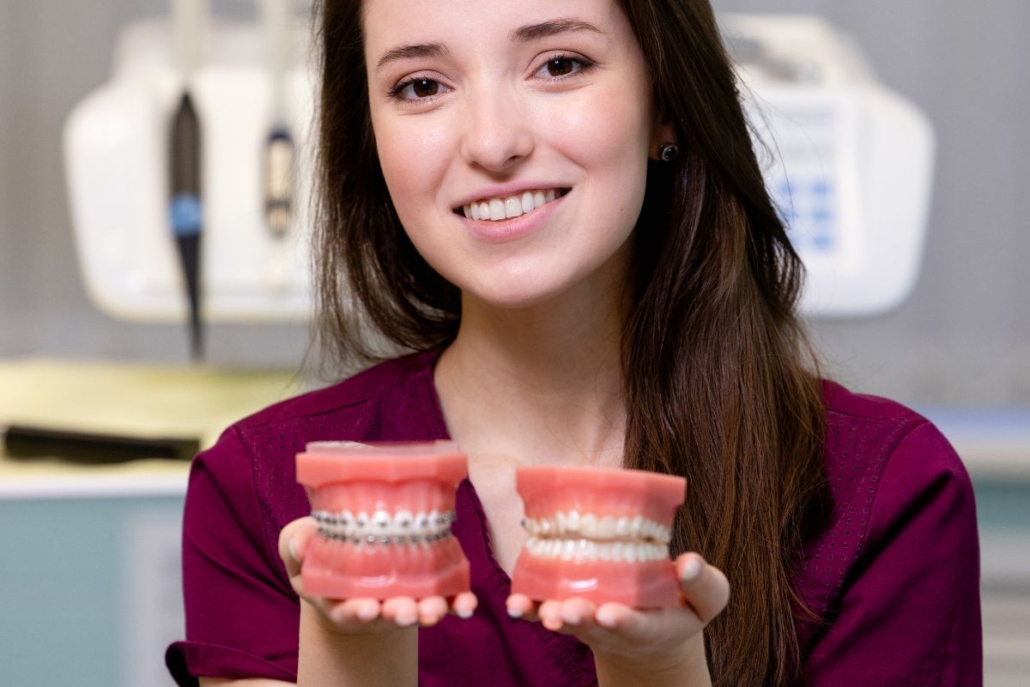
Invisalign vs. Traditional Braces: Which Is Right for You?
Patients in Jacksonville and nearby locations in NC often compare clear trays with metal braces. Both move teeth through controlled pressure. The right choice depends on diagnosis, required movements, habits, and priorities.
At A Beautiful Smile, The Office of Dr. Gina Mancini, Dr. C Mancini considers clinical needs before appliance preferences. When discussing Invisalign in Jacksonville, the goal is to explain what each option requires so patients can make an informed decision without assuming that one method fits every smile.
A Quick Comparison Before You Decide
Invisalign is removable and less noticeable. Braces remain attached and provide continuous force without relying on remembering to wear them daily.
Invisalign Appearance and Visibility
Aligners are made from transparent plastic and fit closely over the teeth. Tooth-colored attachments may be added to facilitate specific movements, making treatment discreet rather than invisible.
Braces are easier to see because brackets and wires remain on the teeth. Some patients enjoy choosing band colors, while others prioritize a lower-profile appearance for work, school, or social events.
Removability, Meals, and Oral Hygiene
Clear trays come out for meals and most drinks. This means there are generally no bracket-related food restrictions. Patients still need to brush or rinse before reinserting trays to prevent food and sugars from being held against the teeth.
With braces, hard or sticky foods can damage hardware. Cleaning requires extra care, but the appliance cannot be lost at lunch.
Comfort and Adjustment
Both options create pressure as teeth move, so temporary tenderness is normal. Smooth tray edges may reduce rubbing against the cheeks, though an edge or attachment can sometimes irritate the mouth. Brackets and wire ends can also cause short-term soreness, especially after adjustments.
Neither approach should cause uncontrolled or persistent pain. Patients should contact the dental team if an appliance breaks, no longer fits, or produces significant discomfort.
Responsibility and Daily Routine
Invisalign works only when worn for the prescribed time. Trays need a clean storage case, regular cleaning, and careful handling. Losing them or leaving them out too long can interrupt planned movement.
Braces remain active throughout the day. They can suit patients who prefer not to manage a removable appliance, but they require attention to food choices, cleaning around hardware, and appointments for wire adjustments.
Patients can visit our dental office to compare these responsibilities with school, work, travel, sports, and home routines. Practical fit is part of clinical fit.
Treatment Time and Appointments
Either method can take months or longer. Duration depends on the starting bite, biological response, treatment goals, missed visits, appliance problems, and cooperation. Clear-tray treatment can also be extended if wear is inconsistent or if additional refinement trays are needed.
The blog “How Long Does Invisalign Treatment Take?” explains why a short online estimate cannot replace an individual plan. Braces also require periodic monitoring and adjustments.
Questions That Help You Decide
Before choosing, ask:
- Which option can accomplish the required movements predictably?
- How much daily responsibility am I ready to manage?
- Are appearance or food flexibility major priorities?
- Do I have dental work or gum concerns that affect planning?
- What happens if progress differs from the original simulation?
- Will I commit to retainers after either option?
A diagnostic consultation should answer these questions and explain reasonable alternatives. Preparing for Your Clear Aligner Consultation can help you arrive ready for that discussion.
Find the Right Orthodontic Treatment for Your Smile
Invisalign and braces are tools, not competing guarantees. The more appropriate option is the one that can safely produce the needed movements and that you can manage consistently. For a recommendation based on your bite, oral health, and routine, book an appointment at our Jacksonville dental office.
Frequently Asked Questions
Do clear aligners work faster than braces?
Not automatically. Timeline depends on case complexity, treatment goals, biological response, and cooperation. A simpler tray case may finish sooner than a complex braces case, but appliance type alone does not determine duration.
Which option is easier to keep clean?
Removable trays allow normal brushing and flossing, but teeth should be cleaned before reinsertion. Braces require cleaning around brackets and wires. Either option can support oral health when the recommended routine is followed.
Can I play sports with either appliance?
Many patients can. A suitable mouthguard may be recommended for contact sports. Clear trays may need to be removed for certain activities, while braces require a mouthguard designed to fit over brackets.
Are attachments always required with clear trays?
No. Attachments are prescribed when they improve grip or control for certain movements. Their number, shape, and placement depend on the digital plan and cannot be predicted from a photo alone.
Will I need a retainer afterward?
Yes, retention is usually necessary after either method because teeth can shift over time. The dentist will provide a wear schedule based on the finished result and monitor stability during follow-up care.
 Find Us on Google Maps
 Find Us on Apple Maps